

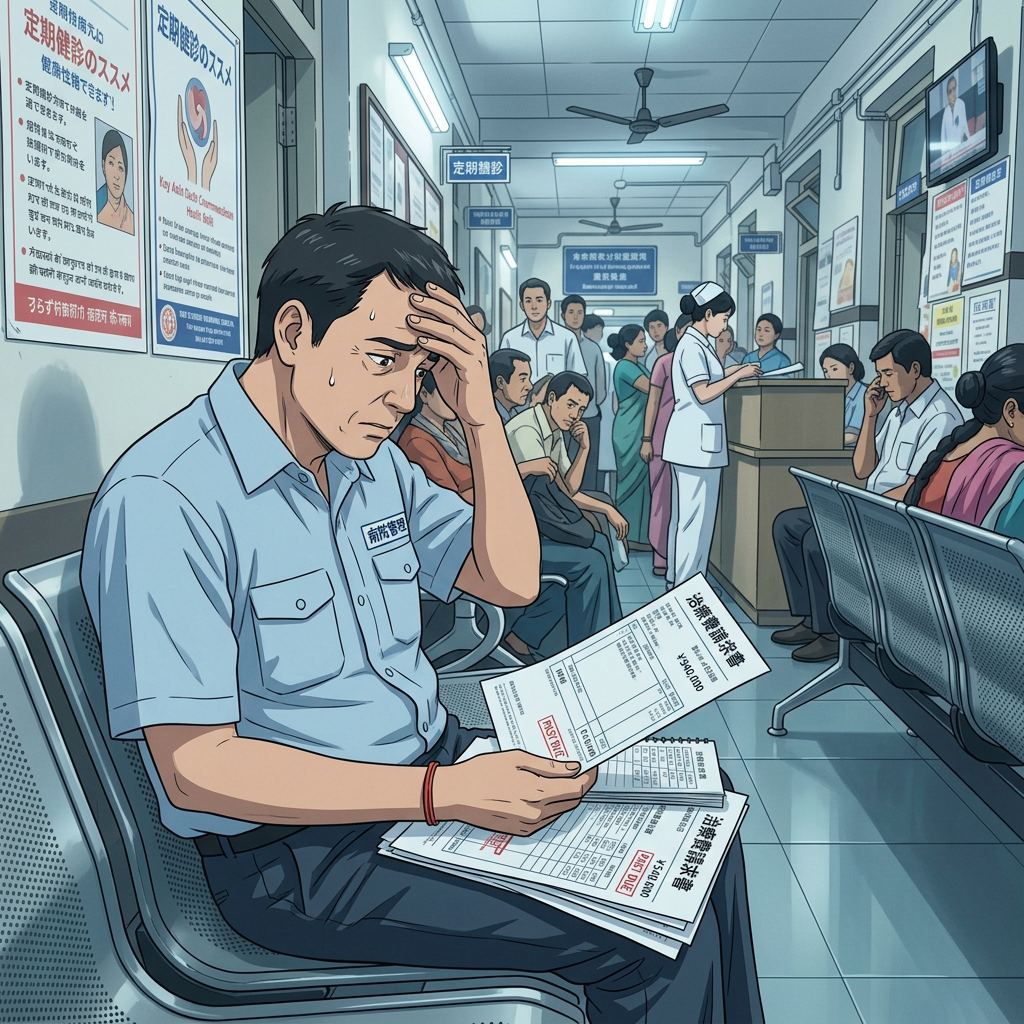


Health insurance is no longer a luxury in India. It is becoming an essential financial protection tool—especially for employees earning less than ₹15,000 per month.
For a person earning ₹10,000, ₹12,000 or ₹15,000 per month, even a relatively small medical emergency can create a major financial problem. A few days of hospitalization, an unexpected surgery, an accident, or treatment for a serious illness can potentially cost several months or even years of savings.
Many low-income employees believe that health insurance is something only middle-class or high-income families need. In reality, the opposite can often be true.
When a person has a high income and substantial savings, they may be able to absorb an unexpected medical expense. But when monthly income is limited and savings are small, a medical emergency can quickly result in borrowing, credit-card debt, selling investments, delaying important expenses, or depending on family members.
This is why understanding health insurance is particularly important for employees earning below ₹15,000 per month.
This article explains:
- Why health insurance matters for low-income employees
- How medical emergencies can affect monthly income
- What can happen when you do not have health insurance
- The difference between employer-provided and personal health insurance
- Why young employees should consider insurance early
- How health insurance can protect family finances
- What features employees should check before purchasing a policy
- How a health insurance company such as Tata AIG can potentially help
- Important mistakes to avoid
- Practical examples and case studies
Important: Health insurance policies differ in their coverage, exclusions, waiting periods, limits and terms. Always read the policy wording and understand the benefits before purchasing.
1. Why Health Insurance Matters More When Your Salary Is Below ₹15,000
Imagine an employee earning ₹13,000 per month.
After paying for:
- Rent or accommodation
- Food
- Transportation
- Mobile expenses
- Electricity
- Family expenses
- Education
- Personal expenses
there may be very little money left for savings.
Now imagine that the employee suddenly requires hospitalization.
Even if the medical bill is ₹50,000, that amount represents almost four months of the employee’s gross monthly salary.
If the bill reaches ₹1 lakh, it represents more than seven months of salary.
A ₹2 lakh medical expense can represent more than a year’s salary.
This is the fundamental reason health insurance can be valuable for lower-income employees.
Medical emergencies do not consider your salary
A disease does not become less expensive because someone earns ₹12,000 per month.
A hospital does not necessarily charge less because a patient is a junior employee.
An accident can happen to anyone.
A sudden infection can affect anyone.
A hospitalization can happen to a young employee, a parent, a spouse or a child.
Therefore, financial protection against medical expenses is particularly important when the household has limited disposable income.
2. A Simple Example: ₹12,000 Monthly Salary
Consider an employee named Rahul.
Rahul earns ₹12,000 per month.
His annual salary is approximately:
₹12,000 × 12 = ₹1,44,000
Now suppose Rahul has a medical emergency and the hospital bill is ₹80,000.
The hospital bill is equivalent to more than half of his annual salary.
If Rahul has only ₹20,000 in savings, he needs another ₹60,000.
Where could that money come from?
He might have to:
- Borrow from relatives
- Take a personal loan
- Use a credit card
- Ask friends for financial assistance
- Sell valuables
- Withdraw emergency savings
- Delay rent or other payments
- Depend financially on parents or siblings
This is where health insurance can become an important part of financial planning.
The purpose of insurance is not to make someone rich.
Its purpose is to help protect finances against covered medical expenses, subject to the policy’s terms and conditions.
3. Medical Costs Can Destroy Years of Savings
One of the biggest financial risks for a low-income employee is the possibility of losing accumulated savings because of a medical emergency.
Suppose an employee saves ₹2,000 every month.
After one year:
₹2,000 × 12 = ₹24,000
After three years, ignoring investment returns, the employee may have accumulated:
₹72,000
That is a significant achievement for someone earning a modest salary.
But a single hospitalization costing ₹70,000 could potentially consume almost the entire amount.
The employee may then have to start rebuilding savings from zero.
Health insurance can potentially reduce this financial shock when the treatment is covered under the policy.
This is one of the most important concepts employees should understand:
Savings are for building your future.
Insurance is for protecting your finances from unexpected risks.
Both can work together.
4. Health Insurance Is Not Only for Older People
A common misconception among young employees is:
“I am young and healthy. Why do I need health insurance?”
This sounds reasonable until an unexpected event occurs.
Young people can also experience:
- Accidents
- Infections
- Dengue
- Appendicitis
- Kidney stones
- Injuries
- Fractures
- Emergency surgeries
- Certain serious illnesses
- Other conditions requiring hospitalization
Being young can reduce certain health risks, but it does not eliminate medical emergencies.
There is another advantage to considering insurance while young: depending on the policy, age and underwriting conditions, obtaining coverage earlier may provide longer-term financial protection.
However, employees should not purchase a policy simply because someone tells them that “young people never have health problems.”
The decision should be based on their personal financial situation, family responsibilities and insurance requirements.
5. What Happens If an Employee Does Not Have Health Insurance?
Not having health insurance does not mean that something bad will definitely happen.
But it means the employee is personally responsible for paying eligible medical expenses that would otherwise potentially be covered by insurance.
Consider three possible situations.
Situation 1: Minor medical expense
The employee pays from savings.
This may not create a major problem.
Situation 2: Moderate hospitalization
The employee uses most of their emergency fund.
This can delay other financial goals.
Situation 3: Major hospitalization
The employee may need to borrow money or take a loan.
This can create a debt burden that continues long after the medical treatment is completed.
The financial impact can therefore extend beyond the hospital.
6. Case Study: Employee Earning ₹14,000 Per Month
Let’s consider another example.
Priya earns ₹14,000 per month.
She has been working for two years and has managed to save ₹50,000.
Unfortunately, she meets with an accident and requires hospitalization.
Suppose the eligible medical expenses covered under an appropriate health insurance policy amount to ₹75,000.
Without insurance:
Medical expense = ₹75,000
Savings = ₹50,000
Shortfall = ₹25,000
Priya would need to arrange the remaining amount.
With an appropriate health insurance policy, the insurer may pay eligible expenses according to the policy terms, subject to applicable deductibles, exclusions, waiting periods, limits and other conditions.
This could allow Priya to preserve a larger portion of her savings.
The lesson
For someone earning ₹14,000 per month, protecting ₹50,000 of savings may be extremely important.
Health insurance can be one tool for protecting that financial cushion.
7. Employer Health Insurance vs Personal Health Insurance
Employees should understand an important difference between employer-provided health insurance and personal health insurance.
Some employers provide group health insurance as an employee benefit.
This can be useful because the employee may receive medical coverage without having to purchase an individual policy separately.
However, employees should understand the conditions of the employer’s group policy.
For example:
- What is the sum insured?
- Is the employee covered?
- Are parents covered?
- Is the spouse covered?
- Are children covered?
- Which hospitals are included in the cashless network?
- What are the exclusions?
- Are there waiting periods?
- What happens when employment ends?
- Is maternity coverage available?
- Are pre-existing diseases subject to waiting periods?
The exact answers depend on the employer’s policy.
Why personal health insurance can still be important
Employment can change.
An employee may:
- Change companies
- Lose a job
- Take a career break
- Move to another employer
- Become self-employed
Employer-provided insurance may be connected to employment and therefore may not provide the same continuity as an independently purchased policy.
For this reason, employees should understand their employer’s insurance rather than assuming that “company insurance means I don’t need anything else.”
8. Why Health Insurance Can Be Important for Employees Supporting Their Families
A salary of ₹15,000 may not support only one person.
Many employees also contribute to:
- Parents
- Spouse
- Children
- Siblings
- Household expenses
If the employee becomes sick and cannot work, the problem can become larger than the hospital bill.
There may also be loss of income.
Consider an employee earning ₹13,500 per month.
If hospitalization prevents the employee from working for one month, the household could potentially face:
Medical expenses + reduced income + normal household expenses
This creates a double financial pressure.
Health insurance primarily addresses eligible healthcare expenses according to the policy terms. It is not necessarily a replacement for income protection.
Therefore, employees should think about two separate risks:
Risk 1: Medical expenses
Health insurance may help cover eligible medical expenses.
Risk 2: Loss of income
Employees may need savings, employer benefits or other forms of financial protection for income interruption.
This distinction is extremely important.
9. Cashless Hospitalization: Why It Matters
One of the features employees often hear about is “cashless hospitalization.”
Under a cashless facility, where applicable and subject to the insurer’s process and policy terms, an insured person can receive treatment at an eligible network hospital without having to pay the entire eligible hospitalization bill upfront.
However, cashless does not necessarily mean:
“The insurance company pays every rupee.”
There can be:
- Non-covered expenses
- Deductibles
- Co-payments
- Policy limits
- Exclusions
- Room-rent restrictions
- Consumable expenses
- Waiting periods
- Other applicable conditions
Therefore, employees should understand the policy instead of assuming that every hospital bill is automatically covered.
10. What Is a Network Hospital?
Insurance companies generally maintain networks of hospitals where eligible cashless treatment may be available according to policy conditions and applicable authorization procedures.
Before buying a policy, employees should check whether suitable hospitals are available in their city or nearby areas.
For someone earning less than ₹15,000 per month, accessibility is important.
A policy may appear attractive on paper, but employees should also ask:
“Where can I actually use this policy?”
Check hospitals close to:
- Home
- Workplace
- Parents’ residence
- Frequently visited locations
This can make the policy more practical during an emergency.
11. What Is a Sum Insured?
The sum insured is broadly the maximum amount of coverage available under a health insurance policy, subject to the policy terms.
For example, a policy may provide a particular sum insured.
Employees should not select the amount simply because it is the cheapest option.
Instead, they should consider:
- Medical costs in their city
- Family responsibilities
- Hospital costs
- Age
- Existing medical conditions
- Inflation
- Whether parents or dependents are covered
- Their ability to pay the premium
The cheapest policy is not automatically the best policy.
At the same time, employees with limited salaries should avoid purchasing coverage that creates an unaffordable financial burden.
The goal is sustainable protection.
12. Important Health Insurance Features to Understand
Before purchasing health insurance, employees should learn some basic terms.
12.1 Waiting Period
Some medical conditions may be covered only after a specified waiting period.
This is particularly important for certain pre-existing diseases and specific treatments.
Employees should read the policy documents carefully.
12.2 Pre-Existing Diseases
If an employee already has a medical condition before purchasing insurance, the policy may treat it as a pre-existing disease according to its definitions.
Coverage may be subject to a waiting period or other conditions.
Employees should always disclose medical information honestly during the application process.
12.3 Room-Rent Limits
Some policies may have room-rent restrictions.
If the employee chooses a room that exceeds the policy’s applicable limit, certain related expenses may be affected depending on the policy terms.
Therefore, room-rent conditions should never be ignored.
12.4 Co-Payment
A co-payment means the insured person may have to bear a specified percentage of eligible expenses.
For example, if a policy has a 20% co-payment, the insured may have to bear the applicable portion of covered expenses according to the policy.
The exact calculation depends on the policy.
12.5 Exclusions
Every health insurance policy has exclusions.
These are situations, treatments or expenses that may not be covered.
Employees should read exclusions before purchasing.
Never assume:
“If I have insurance, everything will be paid.”
That is not how health insurance works.
13. Why Employees Should Read the Policy Wordings
Many people purchase insurance based only on:
- Premium
- Sum insured
- Advertisements
- Sales presentations
That is not enough.
A responsible insurance buyer should understand:
- Coverage
- Exclusions
- Waiting periods
- Claim process
- Cashless hospital process
- Co-payment
- Deductibles
- Room-rent conditions
- Renewal conditions
- Network hospitals
- Restoration/reinstatement features, if applicable
- Sub-limits, if applicable
Policy terms differ from one plan to another.
Therefore, employees should compare the actual policy documents rather than relying only on advertisements.
14. How Tata AIG Can Help Employees Explore Health Insurance
Employees looking for health insurance may consider established insurers such as Tata AIG, while comparing the policy’s actual benefits, terms and pricing against their requirements.
Tata AIG offers health insurance products in India, but employees should understand that the suitability of a particular plan depends on individual requirements.
When evaluating a Tata AIG health insurance policy—or any other insurer—employees should examine:
- Sum insured
- Premium
- Hospital network
- Cashless facility
- Waiting periods
- Pre-existing disease conditions
- Room-rent rules
- Co-payment
- Deductibles
- Day-care treatment coverage
- Pre- and post-hospitalization coverage
- Exclusions
- Claim process
- Renewal conditions
The objective should not simply be to buy “Tata AIG insurance.”
The objective should be to choose a health insurance policy that provides appropriate protection at a premium that the employee can sustainably afford.
15. Why Health Insurance Can Be Useful Even If You Earn Only ₹10,000
Let’s consider someone earning ₹10,000 per month.
Annual salary:
₹10,000 × 12 = ₹1,20,000
Suppose this person has ₹30,000 in savings.
A medical emergency costing ₹1 lakh would be extremely difficult to manage.
This is precisely where insurance can become valuable.
The employee is not buying insurance because they have a large amount of money.
They are considering insurance because they do not have enough money to absorb a large unexpected medical expense.
This is an important financial principle:
The lower your ability to absorb a financial shock, the more important risk management can become.
16. Health Insurance and Emergency Funds Should Work Together
Employees should not think:
“If I buy health insurance, I don’t need savings.”
That would be a mistake.
A better approach is:
Health insurance + emergency fund + regular savings
Each serves a different purpose.
Health insurance
Designed to provide financial protection for eligible healthcare expenses according to policy terms.
Emergency fund
Used for unexpected expenses such as:
- Rent
- Food
- Transportation
- Temporary loss of income
- Non-covered medical expenses
- Family emergencies
Savings
Used for future financial goals.
Therefore, even employees earning ₹15,000 or less should try to build savings gradually.
Even ₹500 or ₹1,000 per month can be a starting point if their budget allows it.
17. What If You Cannot Afford a Large Premium?
This is a very practical question.
Someone earning ₹10,000–₹15,000 cannot necessarily spend a large amount on insurance.
Therefore, affordability matters.
Before purchasing a policy:
Step 1: Calculate monthly income
For example:
₹13,000
Step 2: Calculate essential expenses
For example:
- Food: ₹4,000
- Travel: ₹1,500
- Rent: ₹3,000
- Mobile/utilities: ₹1,000
- Family contribution: ₹1,500
Remaining amount:
₹2,000
The employee should then consider how much can reasonably be allocated toward insurance and savings without affecting essential expenses.
The exact premium depends on many factors including age, location, coverage, policy type and insurer.
Therefore, employees should obtain an actual quotation before making a decision.
18. Don’t Buy Insurance Only Because Someone Says “This Is the Cheapest”
Price is important.
But it should not be the only factor.
A very low premium may come with limitations that the employee does not understand.
Instead, compare:
Premium + Coverage + Conditions + Exclusions + Network + Claim process
The best policy is not necessarily the cheapest.
It is the policy that provides appropriate protection at a cost you can afford.
19. What Employees Should Ask an Insurance Advisor
Before purchasing a health insurance policy, employees should ask clear questions.
Question 1
What is the total sum insured?
Question 2
What is covered?
Question 3
What is not covered?
Question 4
Are there waiting periods?
Question 5
Are pre-existing diseases covered?
Question 6
Which hospitals are available for cashless treatment?
Question 7
Is there a co-payment?
Question 8
Are there room-rent restrictions?
Question 9
What are the major exclusions?
Question 10
How does the claim process work?
Question 11
What happens if I change jobs?
Question 12
What happens to the policy when I renew it?
These questions can help employees make a more informed decision.
20. Case Study: Two Employees, Two Different Outcomes
Consider two employees.
Employee A – No Health Insurance
Salary: ₹13,000/month
Savings: ₹40,000
Unexpected hospitalization: ₹90,000
Potential shortfall:
₹90,000 − ₹40,000 = ₹50,000
The employee may need to borrow ₹50,000.
Employee B – Has Appropriate Health Insurance
Salary: ₹13,000/month
Savings: ₹40,000
Hospitalization: ₹90,000
If the treatment is covered under the employee’s health insurance policy, the insurer may settle eligible expenses according to the policy terms.
The employee may still have to pay applicable non-covered expenses, deductibles, co-payments or other amounts.
But the financial impact could be significantly different.
The key lesson
Insurance does not prevent illness.
It can help manage the financial consequences of covered medical treatment.
21. Health Insurance Can Protect Family Financial Goals
Suppose a low-income employee is saving money for:
- Marriage
- Children’s education
- Parents’ needs
- House deposit
- Vehicle
- Emergency fund
A medical emergency can interrupt these goals.
For example, someone saving ₹3,000 per month may take years to build a meaningful amount.
A large medical expense could erase that progress.
Health insurance can potentially act as a financial shield, helping protect savings from eligible healthcare expenses.
22. Why Delaying Insurance May Not Always Be a Good Strategy
Some employees say:
“I’ll buy health insurance when I earn more.”
The problem is that nobody knows when a health emergency will occur.
Additionally, age and health history can influence insurance availability, pricing and underwriting.
Buying insurance earlier may provide the opportunity to establish coverage before certain health problems arise, although the exact terms depend on the insurer and policy.
Therefore, employees should consider their financial situation today rather than waiting indefinitely for a higher salary.
23. Health Insurance Is Part of Financial Planning
Financial planning is not only about:
- Mutual funds
- Stocks
- Fixed deposits
- Gold
- Savings accounts
Risk management is also part of financial planning.
Imagine someone saves ₹2,000 per month but has no protection against a large medical expense.
Their savings plan may be vulnerable to a major financial shock.
A basic financial plan can therefore include:
1. Health insurance
Protection against eligible medical expenses.
2. Emergency savings
Money for unexpected financial requirements.
3. Life insurance where appropriate
Protection for dependents in case of death.
4. Regular savings
Money for short- and medium-term goals.
5. Long-term investments
Money for future goals such as retirement.
Even employees earning modest salaries can gradually build these layers.
24. Common Mistakes Employees Should Avoid
Mistake 1: Assuming Young Means Risk-Free
Young employees can still experience accidents and illnesses.
Mistake 2: Relying Entirely on Employer Insurance
Employer coverage can be useful, but employees should understand what happens if they leave the organization.
Mistake 3: Choosing Only Based on Premium
A cheaper premium does not automatically mean better coverage.
Mistake 4: Hiding Medical Information
Employees should provide accurate information when applying for insurance.
Mistake 5: Ignoring Waiting Periods
Waiting periods can be extremely important.
Mistake 6: Not Checking Network Hospitals
A convenient network hospital can be valuable during emergencies.
Mistake 7: Not Reading Exclusions
Understanding what is not covered can be just as important as understanding what is covered.
Mistake 8: Buying More Coverage Than You Can Afford
Insurance premiums need to remain sustainable.
A policy that becomes financially difficult to renew may not be a good long-term solution.
25. A Simple Health Insurance Checklist for Employees Earning Below ₹15,000
Before purchasing health insurance, use this checklist.
Financial checklist
☐ Monthly income calculated
☐ Monthly essential expenses calculated
☐ Emergency savings started
☐ Insurance premium is affordable
Policy checklist
☐ Sum insured understood
☐ Coverage understood
☐ Exclusions checked
☐ Waiting periods checked
☐ Pre-existing disease rules checked
☐ Co-payment checked
☐ Deductibles checked
☐ Room-rent conditions checked
☐ Network hospitals checked
☐ Claim process understood
☐ Renewal conditions understood
☐ Policy document read
This simple checklist can prevent many misunderstandings.
26. How a ₹15,000 Salary Employee Can Start Financial Protection
Suppose you earn ₹15,000 per month.
You do not need to become financially perfect overnight.
Start gradually.
Step 1: Build a small emergency fund
Even ₹500–₹1,000 per month can be a starting point depending on your circumstances.
Step 2: Understand your employer insurance
Ask HR for the policy details.
Step 3: Explore personal health insurance
Compare suitable plans based on your requirements and affordability.
Step 4: Check family requirements
If you financially support parents, spouse or children, consider their healthcare needs separately.
Step 5: Review the policy annually
Your income and responsibilities may change.
Your insurance requirements may also change.
27. What About Employees Who Already Have Government Health Benefits?
Some employees may qualify for government-sponsored healthcare schemes or employment-linked benefits.
These can be valuable.
Employees should first understand what benefits they already have.
Then they can identify potential gaps.
The objective should be:
Existing benefits + appropriate additional protection
rather than unnecessarily duplicating coverage.
Eligibility and benefits vary by scheme, employment status and circumstances, so employees should verify their specific eligibility.
28. Health Insurance Is About Financial Peace of Mind
Nobody wants to think about hospitalization.
But financial planning requires thinking about uncomfortable possibilities before they happen.
Imagine being able to focus on recovery instead of constantly worrying:
“How will I pay this hospital bill?”
That is one of the major purposes of financial protection.
Health insurance cannot remove the emotional stress of illness.
But appropriate insurance can potentially reduce the financial burden associated with covered treatment.
29. Why This Is Especially Important for India’s Lower-Income Workforce
India has millions of employees working in roles where monthly income is limited.
For many such employees, financial priorities include:
- Rent
- Food
- Education
- Transportation
- Family support
- Loan repayments
- Savings
There may not be enough disposable income to handle a large medical emergency.
This makes financial risk management particularly important.
Health insurance should therefore not be viewed only as a product for wealthy people.
It can be considered a financial protection tool for ordinary working families as well.
30. Final Thoughts: Your Salary Should Not Decide Whether You Protect Your Health
If you earn ₹10,000, ₹12,000 or ₹15,000 per month, you may feel that health insurance is too expensive or unnecessary.
But consider the alternative.
A single major medical emergency could potentially cost:
- Months of salary
- Years of savings
- Borrowed money
- Family financial support
- Future financial goals
Health insurance is designed to help manage the financial risk of eligible medical expenses, according to the policy’s terms and conditions.
The right approach is not to blindly purchase the most expensive policy.
Instead:
Understand your needs.
Compare policies.
Check the exclusions.
Understand waiting periods.
Check network hospitals.
Choose coverage you can afford to maintain.
Read the policy document.
Employees may also compare health insurance offerings from insurers such as Tata AIG and other providers before making a decision.
For employees earning below ₹15,000 per month, the objective should be simple:
Protect your health, protect your savings, and protect your family’s financial future.
Your salary may be ₹10,000 today.
It may become ₹20,000, ₹30,000 or ₹50,000 in the future.
But a medical emergency can happen at any income level.
Building financial protection early can therefore be one of the most responsible steps an employee can take.
Frequently Asked Questions
1. Is health insurance necessary for an employee earning below ₹15,000?
Health insurance can be particularly valuable for lower-income employees because a large medical expense may represent a significant portion of their annual income and savings.
2. Can a person earning ₹10,000 afford health insurance?
It depends on the person’s age, location, coverage requirements, insurer and policy selected. Employees should compare actual premiums and choose coverage that remains affordable.
3. Is employer health insurance enough?
It depends on the employer’s policy. Employees should check coverage, dependents, exclusions, limits and what happens when employment ends.
4. Does health insurance cover every hospital expense?
No. Coverage depends on the policy terms. Exclusions, waiting periods, deductibles, co-payments, limits and non-covered expenses may apply.
5. What is cashless hospitalization?
It is a facility that may allow eligible treatment at a network hospital to be settled directly between the insurer/administrator and hospital, subject to policy terms and applicable authorization.
6. Should young employees buy health insurance?
Young employees can still experience accidents or illnesses. Considering insurance early may provide an opportunity to establish coverage before future health changes, subject to policy terms and underwriting.
7. Should I choose the cheapest health insurance policy?
Not necessarily. Compare coverage, exclusions, waiting periods, hospital network, claim procedures and other conditions along with premium.
8. Can Tata AIG provide health insurance?
Tata AIG offers health insurance products in India. Employees should review the specific policy’s current terms, benefits, exclusions, eligibility and premium before purchasing.
Conclusion
For an employee earning below ₹15,000 per month, health insurance should not be viewed as an unnecessary luxury.
It can be an important component of financial risk management.
When income is limited, the ability to absorb a large unexpected hospital bill is also limited. Appropriate health insurance can potentially help protect savings from eligible medical expenses and reduce the financial shock of hospitalization.
The most important message is simple:
Don’t wait until you become wealthy to start protecting your finances.
Start by understanding your existing employer benefits, building an emergency fund and exploring affordable health insurance options.
A small amount spent on appropriate financial protection today may help prevent a much larger financial problem tomorrow.
Health is your most valuable asset. Protecting it also means protecting the financial future of your family.
📞 Interested in Tata AIG Health Insurance?
Choosing the right health insurance plan is an important step toward protecting yourself and your family’s financial future. If you’re considering Tata AIG Health Insurance and would like assistance understanding available plans, coverage options, premiums, waiting periods, exclusions, or other policy features, you can get in touch for personalized guidance.
📱 Contact for Personalized Assistance
Call or WhatsApp: +91 6303283138
You can get assistance with:
- Individual Health Insurance
- Family Floater Health Insurance
- Senior Citizen Health Insurance
- Critical Illness Insurance
- Super Top-Up Health Insurance
- Cashless Hospitalization Guidance
- Policy Renewals
- Health Insurance Portability
- Premium Estimation
- Claim Assistance and Process Guidance
- Understanding Policy Features and Benefits
- Understanding Waiting Periods and Exclusions
- Choosing an appropriate level of health insurance coverage
Whether you’re purchasing health insurance for the first time, looking for additional coverage, reviewing your existing policy, or considering portability, personalized guidance can help you better understand your available options and make an informed decision.
📱 Call or WhatsApp: +91 6303283138
⚠️ Disclaimer
This article is intended for general informational and educational purposes only and should not be considered financial, medical, legal, or insurance advice.
Insurance premiums, benefits, coverage, waiting periods, exclusions, eligibility, deductibles, co-payments, claim procedures and claim settlement are subject to the terms and conditions of the selected Tata AIG Health Insurance policy, underwriting guidelines and applicable regulatory requirements.
The availability of a particular insurance product or benefit may depend on eligibility, medical history, underwriting and the specific policy selected.
Please carefully read the policy brochure, Customer Information Sheet (CIS), proposal form and policy wording before purchasing any insurance product.
All information relating to insurance products should be verified with Tata AIG General Insurance Company Limited before making a purchase decision.
Final acceptance of any insurance proposal is at the sole discretion of Tata AIG General Insurance Company Limited, subject to its applicable underwriting guidelines and policy terms and conditions.
For the latest product information, please refer to the official Tata AIG website or contact an authorized Tata AIG representative
Leave a Reply