

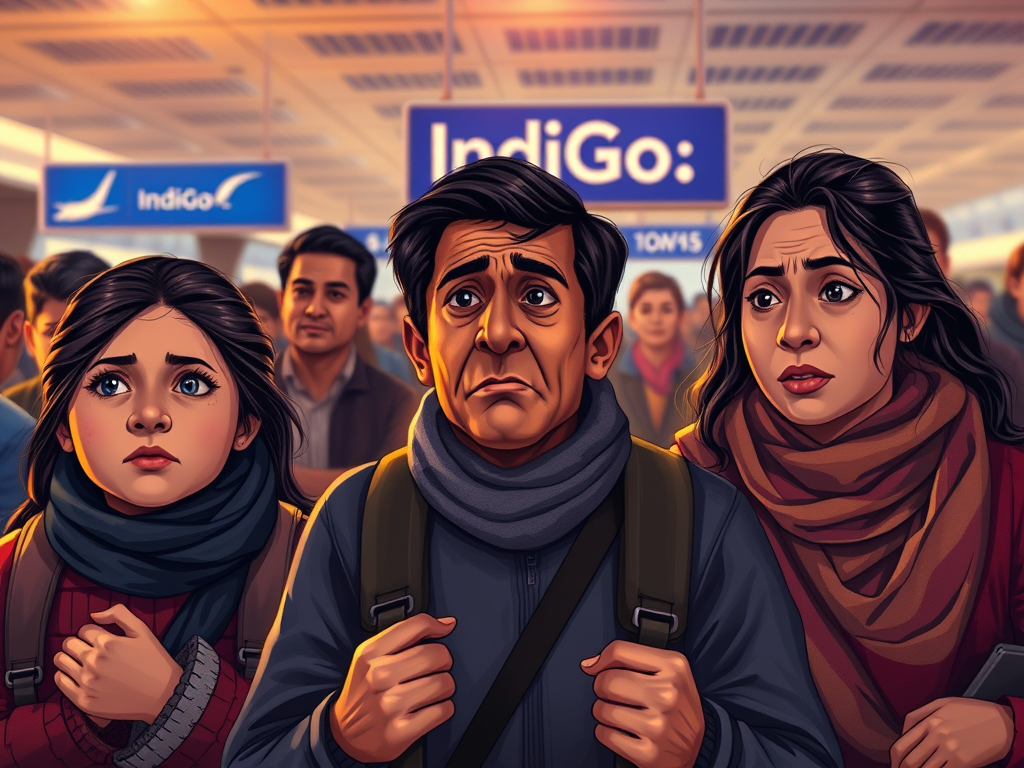
Introduction: A Season of Chaos, Complaints, and Passenger Outrage
December is traditionally the busiest month in India’s aviation calendar. With Christmas, New Year holidays, weddings, and year-end business travel, airports are packed, airlines are fully booked, and the entire aviation ecosystem is under immense pressure. During this period, any form of operational negligence, staff misbehaviour, or irresponsible decision-making becomes magnified because the number of people affected multiplies dramatically.
Over the last few years, one name has repeatedly been highlighted by Indian passengers: IndiGo Airlines. Although it is India’s largest and one of the most profitable airlines, IndiGo has also been frequently criticized for:
- sudden cancellations
- recurring delays
- rude or unresponsive staff
- mismanagement during peak travel
- inadequate customer service
- failure to provide timely updates
- mishandling baggage
- high penalties for small changes
- opaque pricing
December brings a sharp spike in these complaints. Families with children are stranded for hours, senior citizens are left without assistance, and travellers are forced into long waiting lines with little communication from staff.
This raises a critical question:
What can the Indian government do to hold airlines—especially IndiGo—accountable and protect millions of passengers from negligence and poor conduct?
This article presents a comprehensive 3000-word blueprint detailing how the Indian government can enforce stronger penalties, stricter monitoring, and better passenger protection laws.
1. Understanding the December Travel Problem
1.1 Sudden Surges in Passenger Volume
India sees up to a 25–35% spike in passenger footfall during December. Airlines often fail to prepare adequate staffing, aircraft rotation schedules, and contingency plans.
1.2 Poor Weather Preparedness
Fog in North India, snowfall in the hills, and winter operational challenges lead to delays. But many cancellations by airlines—especially low-cost carriers—are not weather-related but mismanagement-related.
1.3 Passenger Rights Remain Weak
Unlike Europe, the United States, or even UAE, Indian passengers do not enjoy strong compensation laws. Airlines take advantage of this loophole.
This combination of factors creates a perfect storm during December.
2. Why IndiGo Faces Maximum Complaints
IndiGo handles the largest volume of domestic passengers, which means:
- maximum flights
- maximum chances of operational issues
- maximum visibility among complaints
But that is not all. IndiGo has been criticized for:
✔ quick cancellations without explanation
✔ charging passengers for almost every small service
✔ lack of empathy in staff behaviour
✔ robotic customer service systems
✔ lack of transparency in operational decisions
Passengers often say:
“IndiGo runs like a machine, not a service company.”
When emotional intelligence is missing, even small operational lapses look worse.
3. The Government’s Role: Why Strong Action Is Necessary
The Ministry of Civil Aviation (MoCA) and DGCA must protect the average Indian passenger. Air travel has become essential—not luxury—and people deserve basic dignity.
Government intervention becomes necessary because:
- Airlines operate in an oligopoly
- Penalties are extremely low
- Passenger rights are vague
- Staff behaviour audits are minimal
- Peak-season rules are outdated
Without strict action, airlines continue to prioritize profits over public welfare.
4. Strong Penalties the Government Should Impose
4.1 Higher Financial Penalties for Negligence
Current penalties are small compared to airline revenues. Government should raise fines for:
- Unexplained cancellations
- Avoidable delays
- Boarding denials
- Misbehaviour by ground staff or crew
- Mishandling disabled passengers
A minimum penalty of ₹10–₹50 lakh per violation can push airlines to behave responsibly.
5. DGCA Should Adopt EU-Style Passenger Compensation Laws
Europe’s EC 261/2004 is the world’s most passenger-friendly regulation. India should adopt a similar system:
Mandatory Compensation Slabs
- ₹10,000 for 2–3 hour delay
- ₹25,000 for 3–5 hour delay
- ₹50,000 for 6+ hour delay
- Free hotel accommodations for overnight delays
- Full refund + alternative flight for cancellations without valid reason
This alone would force airlines to improve punctuality.
6. Creating a National Airline Behaviour Code
The government must enforce a strict code of conduct applicable to every airline employee:
✔ polite communication
✔ zero tolerance for harassment
✔ mandatory assistance to senior citizens
✔ mandatory care for disabled passengers
✔ training in crisis behaviour
✔ transparency and respect in tone
Repeated violations should lead to immediate suspension or grounding of staff.
7. Independent Airline Misconduct Investigation Board
Similar to the Consumer Disputes Redressal Commission, India needs a dedicated board to:
- investigate serious passenger complaints
- review video footage at airports
- call for airline management explanation
- recommend fines, compensation, or structural reform
Such a board would be unbiased and fast.
8. Passenger Grievances: Government-Run 24×7 Helpline
Currently, airline customer service resolves issues slowly. Government should run:
A Unified Aviation Complaint System (UACS)
This should allow passengers to file complaints instantly, including:
- cancellation problems
- baggage issues
- staff misbehaviour
- compensation requests
Airlines must respond within 24 hours, or the case automatically escalates.
9. Airline Behaviour Transparency Portal
India should create a public dashboard tracking each airline’s:
- monthly delays
- cancellations
- fines imposed
- complaints received
- staff behaviour cases
- baggage mishandling numbers
- compensation given
Public visibility will force airlines to perform better.
10. Government Monitoring During December
December requires special rules every year.
10.1 Mandatory December Action Plans
Airlines must file:
- crew readiness
- aircraft availability
- maintenance logs
- backup aircraft list
- fog readiness plan
- crowd management strategy
10.2 Mandatory Real-Time Passenger Notifications
Airlines must provide:
- real-time SMS updates
- accurate delay reasons
- revised timings
- automatic refund offers
DGCA should fine airlines for misinformation.
11. Strict Action on Overbooking
Overbooking is a silent crisis in India.
Government should:
- ban excessive overbooking
- impose a ₹1 lakh fine per denied passenger
- force airlines to find an alternative flight within 4 hours
- mandate hotel and food reimbursement
This prevents airlines from exploiting passengers for profits.
12. Airport Infrastructure Improvement by the Government
To support airlines, airports must also be strengthened.
Government should:
✔ increase winter staff
✔ upgrade fog landing systems (CAT-III)
✔ improve baggage belts
✔ enforce hygiene and seating availability
✔ deploy more CISF personnel during seasonal rush
Infrastructure and airline performance always go together.
13. Punishment for Misleading Passengers
Some airlines hide the true reason behind cancellations.
Government must enforce:
- mandatory proof for all “technical issues”
- penalties for lying to passengers
- video verification of incidents
- independent audits
No more hiding behind vague excuses.
14. Protecting the Vulnerable: Senior Citizens & Disabled Travellers
Government guidelines should mandate:
- priority check-in
- free wheelchair assistance
- penalties for mistreatment
- dedicated staff specialised in disability support
- staff suspension if abuse is proven
India must become more compassionate.
15. Preventing Price Exploitation in December
Airlines sometimes charge extremely high fares during December. Government must:
- cap dynamic pricing
- cap rescheduling fees
- cap cancellation charges
- enforce transparency in seat-selection pricing
This helps protect the common traveller.
16. Creating a National December Travel Charter
A government charter can define:
- passenger rights
- airline responsibilities
- transparency rules
- refund timelines
- behavioural expectations
Every airline should be required to publicly display this charter.
17. Government-Monitored Social Media Response Team
Many complaints go viral on social platforms. Government can create a Aviation Social Monitoring Cell that:
- tracks major viral incidents
- verifies authenticity
- orders immediate inquiry
- requires airline response within 2 hours
This increases accountability.
18. Airline Ratings System Regulated by the Government
All airlines should receive a Government Safety and Behaviour Rating based on:
- punctuality
- staff politeness
- complaint resolution
- refund speed
- passenger experience
This rating should be displayed on:
- airline websites
- ticket booking portals
- airports
Conclusion: A New Era of Strict Accountability Must Begin
IndiGo may be India’s largest airline, but size does not excuse negligence. December issues prove that:
- operational discipline must improve
- customer behaviour must improve
- staff training must improve
- transparency must improve
- passenger rights must improve
The Indian government must act firmly and decisively. By implementing the strict actions detailed in this blueprint, India can become a global model for passenger safety, airline accountability, and aviation fairness.
Air passengers deserve dignity, respect, and transparency—not stress, mismanagement, or disrespect.
Leave a Reply